
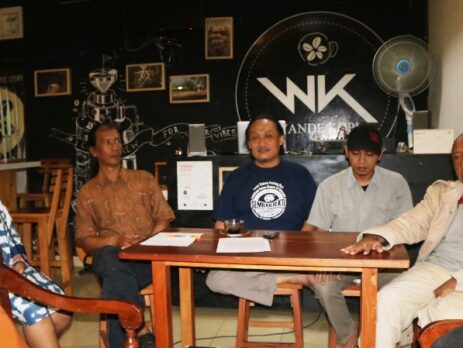
KBRN, Yogyakarta: Starting Thursday evening (12/15/16), dozens of artworks created by 21 Jogja artists will be exhibited at the Yogyakarta Cultural Park for the next week (12/22/16) under the title “The Art Of Nguwongke #1”. They are M. Dwi Marianto, Yusman, Otok Bima Sidarta, Hajar Pamadhi, Liek Suyanto, Astuti Kusumo, Totok Buchori, Adjikoesoemo, Godod Sutejo, Dewobroto, Operasi Rachman, Tarman, Thithut, Fatkur Rochman, Dakota, Tri Suharyanto, Joseph Wiyono, Iswanto, Tini, Eko Sunarto, Mulyono, and Kibar Hardiono.
 Artist Adji Koesoemo, one of the initiators of the exhibition, stated that "The Art Of Nguwongke" stems from a concern over the concerning violations of human values that continue to exist today. This exhibition is also planned to be held annually to commemorate World Human Rights Day, which falls on December 10th.
The youngest artist, 21-year-old Thithut Wande, who is still a student at Muhammadiyah University of Yogyakarta, also participated in the exhibition. To RRI, he expressed that his work is titled “Screaming at a Sensitive Heart.” “That title encourages friends to be sensitive to the environment. Because I was born in Jogja, I was taught unggah-ungguh (politeness/etiquette), but after I started college with friends from all over Indonesia, when I joined and was separated from my parents, they seemed so free without any unggah-ungguh at all,” said Thithut.
“Kata Nguwongke comes from the Javanese language, meaning to humanize humans. That philosophy has a deep meaning about how to respect, appreciate, and treat humans as they should be. Every human always wants to be loved, heard, and paid attention to. Every human also has differences from one another. Therefore, they must receive different appreciations,” said Aji.
M. Dwi Marianto, a lecturer at the Indonesian Institute of the Arts Yogyakarta, conveyed a similar sentiment. According to him, many aspects of everyday life actually contradict Human Rights. Cultural practices in daily life that have not yet ‘nguwongke’ (treated people as humans) occur everywhere, such as on the highway where indifference to the safety of others, and for him, is worsening. Artist Hajar Pamadhi, who also presented his work at this exhibition, stated that "nguwongke" art is humanism art. That is, an effort of humanist thought that places humans in their ‘natural state as humans’ and provides a foundation for tolerance and solidarity.
The exhibition “The Art Of Nguwongke” is a humanitarian reference that is autopoietic and bases its movements on ‘adurasa’ (empathy/consideration) to find human dignity represented through art. The works displayed in this exhibition reveal that humans must be able to "nguwongke" (respect/value/treat with dignity) other living beings, other humans, social events, the universe, and oneself. Bud RRI Yogyakarta


 EN
EN  ID
ID