
- Jl. Suryodiningratan No.8 Yogyakarta 55188 Indonesia
- Tel 0274-419791 Fax 0274-419791
- WA +62 858-9008-5880
- pasca@isi.ac.id
Curriculum
SUBJECT | SKS | Ket |
| SEMESTER 1 | ||
| Art Exploration (Artistic Exploration) | 3 | Required |
| Research Methodology (Research Methods) | 3 | Required |
| Arts-Culture Discourse (Discourses on Art and Culture) | 3 | Required |
| Source of Idea Review (Studies on Sources of Ideas) | 3 | Required |
| Aesthetics (Aesthetics) | 3 | Required |
| Self-Reflection and Psychoanalysis (Self-Reflection and Psychoanalysis) | 3 | Required |
| Number of credits per semester | 18 | |
| SEMESTER 2 | ||
| Applied Aesthetics (Applied Aesthetics) | 3 | Required |
| Artistic Research Methodology (Artistic Research Methods) | 3 | Required |
| Artistic Data Collection Techniques (Techniques of Artistic Data Collection) | 3 | Required |
| Creative Source Review (Studies on Sources of Creativity) | 3 | Required |
| Art Criticism (Art Criticisms) | 3 | Required |
| Strategy Management (Strategic Management) | 3 | Options |
| Community-based Tourism (Community-Based Tourism) | Options | |
| Art and Neuroscience (Arts and Neuro-science) | Options | |
| Art History and Politics (History of Arts and Politics) | Options | |
| Tourism and Culture Management (Management of Tourism and Culture) | Options | |
| Number of credits per semester | 21 | |
| Note: take 2 elective courses | ||
| SEMESTER 3 | ||
| Seminar (Seminar) | 3 | Required |
| Artistic Data Analysis Techniques (Analytical Techniques of Artistic Data) | 3 | Required |
| Art and Rhetoric (Arts and Rhetorics) | 3 | Options |
| Art, Media and Industrialization (Arts, Media, and Industrialization) | Options | |
| Gallery and Museum Management (Management of Gallery and Museum) | Options | |
| Digital Humanities and Aesthetics (Digital Humanities and Aesthetics) | Options | |
| Art Religiosity (Art Reliogicity) | Options | |
| Ecological Arts (Ecological Arts) | Options | |
| Number of credits per semester | 9 | |
| SEMESTER 4 | ||
| Thesis | 8 | Required |
| Total credits | 56 |
COURSE DESCRIPTION
Art Exploration (Artistic Exploration)
For interest creation To help students translate the concepts obtained in the research methodology course, by applying them through the exploration of creative ideas as an initial embryo to find the concept of the work to be prepared for the final project examination.
For interest assessment The basics of art studies related to the interdisciplines of sociology, anthropology, psychology, cultural studies, history and others are given. Two important things in this course are about approaches (both conceptual and methodological) and critical issues according to current circumstances. Regarding the conceptual approach, this course uses references to research results between the fields of art and non-art or between branches of art. Meanwhile, the issues studied are intended to develop students' desire to become public thinkers in accordance with the challenges in the Indonesian context.
For interest showThis course assists students in translating the concepts obtained from the research methodology course, by applying them through the exploration of creative ideas as an initial embryo to find the concept of work prepared for the final project examination.
Research Methodology (Research Methods)
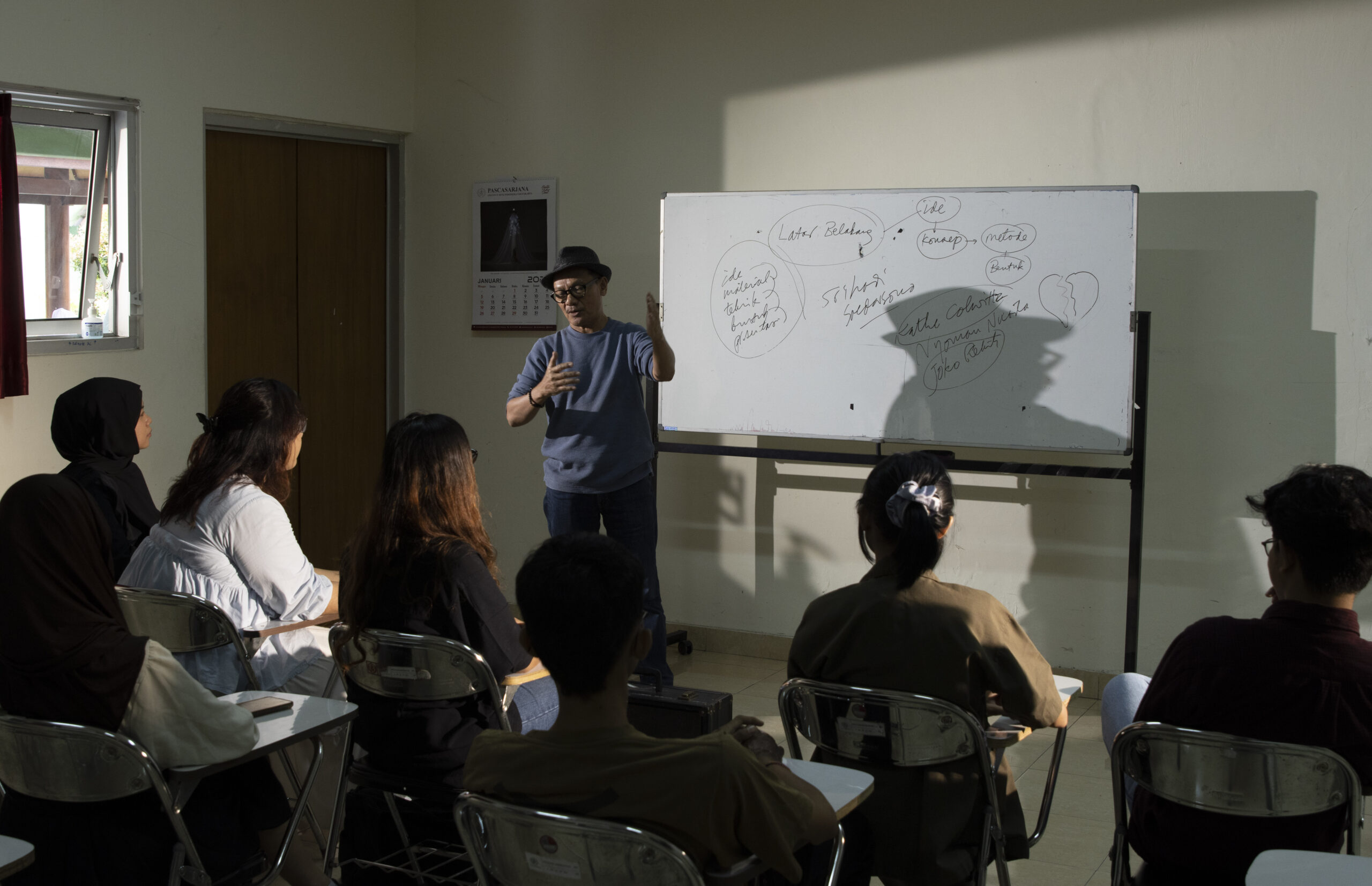
This course is to understand and master the steps of research for the study, creation, performance, and management of art. The material includes topics of design, data collection, analysis, and research writing. Students begin by formulating research questions about the art world. The research topic is further studied through the literature of previous research results, then designing a research strategy to answer the research question.
Arts-Culture Discourse (Discourses on Art and Culture)
Art practice, which is in the creative-artistic area, cannot be separated from discourse practice as part of an effort to narrate and articulate the ideas and messages contained in its creative work. Thus, the work (creative practice) of art is in the realm of cultural work. Meanwhile, along with the development of art practices (breakthroughs in materials/mediums, techniques/technologies, shifting convention boundaries, digitization of art, artificial intelligence (AI), etc.) have implications for the development of discourse practices. For example, what is the existence of art after coming into contact with digitalization, including the use of AI technology; how to talk about art in the context of art auratics, art autonomy, the end of art, and so on. The Art-Culture Discourse course invites students to uncover and expose art practices as well as their discourse practices in the context of cultural practices.
Source of Idea Review (Studies on Sources of Ideas)
This course is closely related to the discursive ability of students in understanding various sources of ideas obtained through art phenomena and studies. Ideas are always related to historical events and are not independent but refer to reality. A wealth of references, primary sources related to the student's choice of interest, will be very helpful in determining a critical perspective on the chosen topic.
Aesthetics (Aesthetics)
Aesthetics can simply be understood as the philosophy of beauty. This course is expected to specifically examine philosophical genres such as Javanese, Indian, Chinese, and other philosophies. With such understanding, students are expected to have a basic understanding to explore local aesthetics related to the choice of topics for study, creation, or performance.
Self-Reflection and Psychoanalysis (Self-Reflection and Psychoanalysis)
This course contains knowledge that seeks to understand the human unconscious (subject) in the context of social life. The human impetus for action often comes from unconscious past experiences, which ultimately form self-identity. The unconscious will be explored and expressed as part of real life through symbols and meanings. This is closely related to self-reflection, which is an understanding of what has happened in the subject so far.
Applied Aesthetics (Applied Aesthetics)
This course is a continuation of the art exploration course as a deepening step in the creation of works. For interest creationThe discussion has dived into the depth of the concept of the work in order to develop all elements of the creation of the work.
For interest assessmentThis course is a continuation of art exploration which discusses various interdisciplinary discourses in art studies. Mastery of art theories to support students' art experience and deepening. By looking at art in a broader perspective, students can place the novelty of art studies.
For interest showThis course is a continuation of the art exploration course as a deepening step in performing arts. The discussion has dived into the issue of the depth of the concept of work in order to develop all elements of performing arts.
Artistic Research Methodology (Artistic Research Methods)
The main skill that every graduate student must have is to conduct research independently in accordance with the general profile of higher education at the graduate level. All theoretical mastery will ultimately be measured by the results of research, so students are expected to understand how an academic research works along with philosophical assumptions. Artistic Research Methodology is oriented towards investigating art in various measurable ways in order to obtain comprehensive answers.
TArtistic Data Collection Techniques (Techniques of Artistic Data Collection)
This course provides an understanding of the concept of data in the artistic research tradition, teaches how to design artistic data collection tools, practice data collection skills, and archive artistic data. The data collected can contain researcher's reflections, process notes, observations of artifacts, test results, audience receptions, and others. At the end of the lecture, students are expected to be able to select, refer to, design, and provide reasons for the data collection techniques they take.
Creative Source Review (Studies on Sources of Creativity)
A continuation of the Source of Idea Study course. This course emphasizes the ability to critically analyze previous works that relate to social and humanitarian interests. Works as texts are approached by considering internal and external (contextual) aspects.
Art Criticism (Art Criticisms)
In this course, students will learn how to observe works of art, record, describe, analyze, and evaluate them in the form of writings/essays, both scientific, journalistic, appreciative, and educational in nature, describe them in language, and see the position of these works in the latest art practices and theories. Observation of artworks is done in person at exhibitions, events and performances or in class through archives. Writing trains students to pay attention to certain aspects of the work from a particular theoretical point of view. Finally, students will learn to see the significance of artworks in current art practice and theory.
Strategy Management (Strategic Management)
In this course students learn to analyze conditions within the organization and outside the organization. The goal is to design organizational strategies, implement and evaluate them. The understanding of management that has been obtained in previous courses is used to understand the 'big picture' outside the organization and how the organization places itself in it to achieve excellence. Organizations here can include both for-profit and non-profit organizations.
Community-based Tourism (Community-Based Tourism)
This course provides insights into the basics of sustainable economic development through creativity and tourism development driven by various communities. This idea is the creative power of the community in developing locality-based cultural spaces.
Art and Neuroscience (Arts and Neuro-science)
A course that combines neuroscientific, physiological, and psychological studies to understand the neural processes that activate artistic creativity, artistic expertise, and the evolution of symbolic cognition in various types of art with visual, auditive, kinetic, and linguistic media to understand how perceptual and emotional processes underlie art creation and aesthetic experience. This course also explores the interaction between art and expectations, experience and knowledge, as well as social and contextual changes in artistic appreciation which are expected to provide an overview of the potential of art to influence mental states, health and well-being. One of the main subjects in this study is the critique of art. various recent research results with two main questions: (1) how the brain computes aesthetic appreciation for sensory objects and (2) how art is created and experienced.
Art History and Politics (History of Arts and Politics)
This course contains an introduction to history as a perspective to see the phenomenon of art in relation to politics. Art is always intertwined in political events, for example in the Indonesian context, art is used as a tool of struggle, as political propaganda or as socio-political commentary and criticism. For example: Struggle posters, pre- and post-independence era paintings, the activities of the Taring Padi group, Collective Art activities in the world of theater, performing arts, literature, and so on. Students learn to understand written archives and oral sources, the weaknesses and strengths of various sources (tangible and intangible). The aim of using history as a tool to understand and read art practices and discourses, so that students have a critical perspective on the development of art history (fine art, visual art, performing arts, recording media arts, or contemporary art), art practices and discourses in relation to politics.
Tourism and Culture Management (Management of Tourism and Culture)
This interdisciplinary course is designed to provide an understanding of various concepts, methods, and techniques of cultural and tourism development at the global, regional, and national levels. Students are expected to be able to compile "strategic planning" of a cultural and tourism development project based on quantitative and qualitative data.
Seminar (Seminar)
In the seminar course, students are given examples, given assignments, and guided to write a thesis proposal to be tested at the end of the third semester. This thesis proposal consists of three parts, namely the introduction, literature/work review, and method (these three parts will be described in detail elsewhere in this paper).
The aim of this activity is for students to produce a proposal that is ready to be tested. To achieve this goal, the lecturer is tasked with showing what components need to be included in the proposal, how the research/creation process works, how to do and the results of the literature review, how to document what needs to be included in the proposal, and the form of the report.
Artistic Data Analysis Techniques (Analytical Techniques of Artistic Data)
This course trains students to use various analytical techniques (coding, descriptive quantitative, and reflection on practice) on their artistic data. Coding follows the Miles and Huberman model. Descriptive quantitative was conducted on a purposive sample. Finally, reflection on and through practice follows Schon and Candy's model. These general techniques of analysis can be integrated into various theoretical frameworks, although their suitability should be considered in depth by students.
Art and Rhetoric (Arts and Rhetorics)
This course explains the development of rhetoric studies and how it intersects with art. By learning this, students can utilize rhetoric to analyze how the images, sounds, forms, and movements of a work of art invite, convince, and persuade people who are nearby.
Art, Media and Industrialization (Arts, Media, and Industrialization)
Art in the realm of creation, study, and performance will always be intertwined with media. This course elaborates and provides critical perspectives related to various art practices, studies, and performances and how the process and problems of mediation. Furthermore, in the realm of industrialization art will intersect with the media.
Gallery and Museum Management (Management of Gallery and Museum)
This course provides a conceptual understanding of visual arts management, including the roles and responsibilities of curators in organizing visual arts event activities in public spaces, including activities in museums and galleries. In this course, various aspects of expertise in the field of visual arts are studied to improve understanding and ability in the implementation of curatorial duties and curatorial processes in museums and galleries at the national and international levels.
Digital Humanities and Aesthetics (Digital Humanities and Aesthetics)
This course brings basic concepts in aesthetics into the digital world. Therefore, the characteristics of art objects need to be rethought because digital objects are intangible and weightless. Human perception through the five senses (especially vision) also needs to be rethought as digital technology both expands and limits our perception. Thus, the way we make art and interact with it changes. The ideas and proposals for this course must utilize digital data or digital media or computer-human interaction. In addition, this course also aims to provide an understanding of the field of digital humanities studies through class presentations, case studies, and group project work. Students learn the skills to collect, digitize, curate, and interpret artifacts that make up the history of a group/community's artistic experiences and activities. Meetings are organized along a general-to-specific flow, starting from theoretical concepts to cases in specific art fields, and ending with research-preservation-exhibition practices.
Art Religiosity (Art Reliogicity)
This course aims to discuss the relationship between religion and art, from various religious traditions and beliefs. This study will look at the discourse and practice of art from a religious perspective, the tensions that have occurred in Indonesian history, including the understanding of halal and haram to mediate and help find solutions to overcome the problems of intolerance that are easily ignited in Indonesian society. Discourse/thought and art practice with a religious perspective can contribute to societal issues, especially related to the relationship between religion and art.
Ecological Arts (Ecological Arts)
This course provides students with basic knowledge, key theories, and analytical skills in order to think about and propose new concepts, practices, approaches, modes, and mediums that are in harmony with nature. Students learn the colonial roots of the modern capitalist system, its relationship with modern subjectivism and some alternatives offered by the concepts of care, everyday aesthetics, interspecies solidarity, and posthuman imagination.
TEACHING STAFF
- Prof. Dr. Djohan, M.Si.
- Prof. Dr. M. Agus Burhan, M.Hum.
- Prof. Dr. Suastiwi, M.Des
- Prof. Dr. St. Hanggar B. Prasetyo, S.Sn., M.Si
- Dr. G.R. Lono Lastoro Simatupang, M.A.
- Handono Eko Prabowo, MBA, Ph.D.
- Dr. Muhammad Kholid Arif Rozaq, M.M.
- Dr. Suwarno Wisetrotomo, M. Hum.
- Dr. Koes Yuliadi, M.Hum.
- Dr. Fortunata Tyasrinestu, M.Si.
- Kurniawan Adi Saputro, Ph.D.
- Dr. Destha Titi Raharjana, S.Sos., M.Si.
- Dr. Citra Aryandari, M.A.
- Dr. Yohana Ari Ratnaningtyas, M.Si
- Dr. Prayanto Widyo Harsono, M.Sn.
- Octavianus Cahyono Priyanto, Ph.D.
- Dr. Drs. H. Agus Rochiyardi, M.M.
- Dr. Kardi Laksono
- Dr. Miftahul Munir
- Dr. Ngurah Wedha Sahadewa
- Dr. Budi Irawanto, S.I.P., M.A.
- Dr. Dian Arymami, S.I.P., M.Hum.
- Oki Rahadianto Sutopo, Ph.D.
EDUCATION COSTS
The tuition fee for the Master program per semester is Rp. 8,000,000.00 (eight million rupiah), and for foreign students (foreigners) Rp. 16,000,000.00 (sixteen million rupiah).
ACADEMIC SUPPORT ACTIVITIES
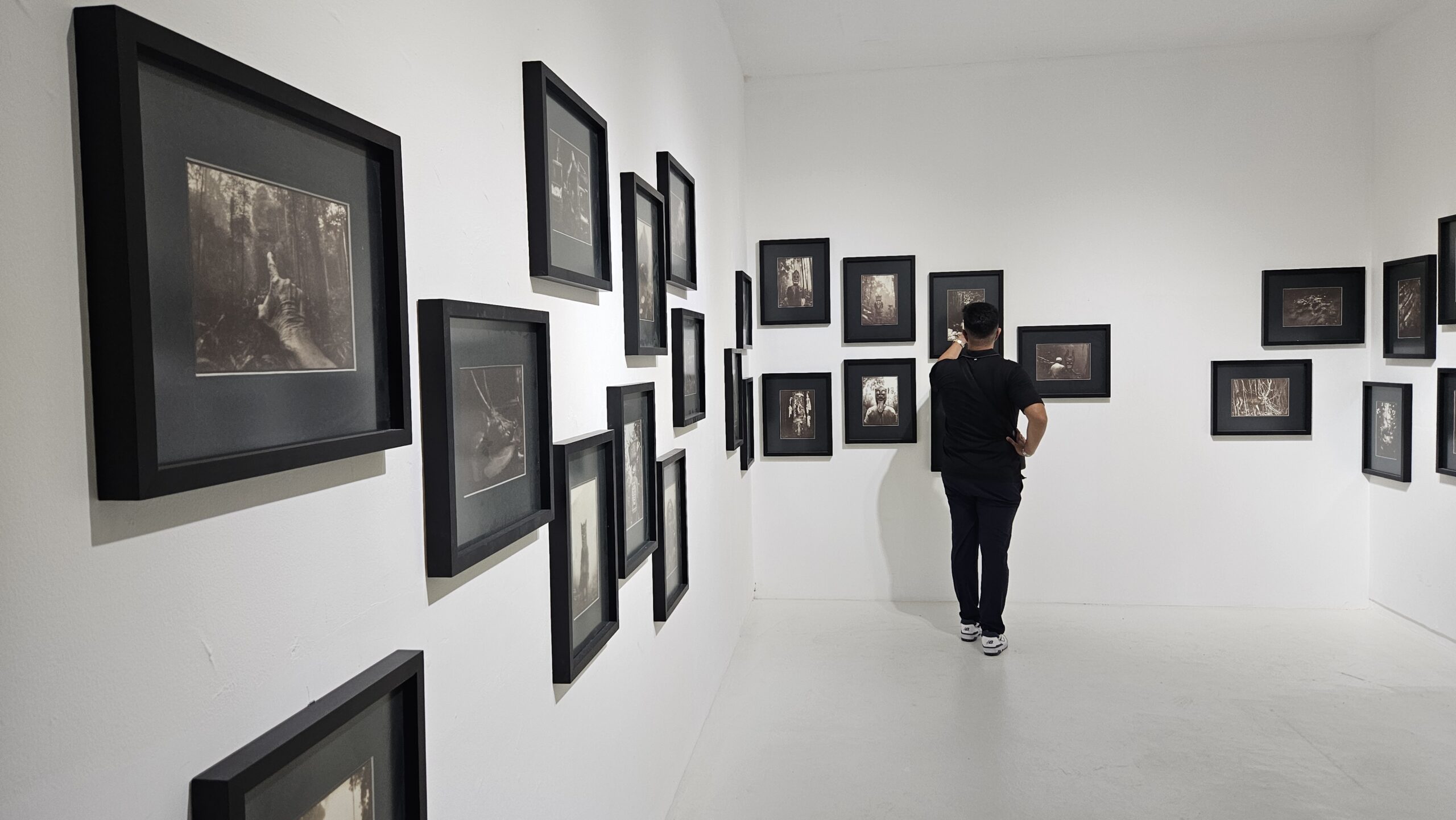
Exhibitions, performances, critical discourse workshops, international seminars and conferences
 EN
EN  ID
ID